Improving your current job performance which, of course, is important
and at the same time…
Extracting and applying from your daily actions and interactions with others, the essential tools and techniques which senior management expect you to demonstrate, if they’re going to trust you with career-enhancing responsibilities.
This Workplace Survival Skills dual-track approach enables you to embark on a more rewarding career path, because it combines enhancing specific skills and then monitoring their practical application to the fast-changing and increasingly challenging workplace environment.
This vividly illustrates the fundamental difference between
Doing a job compared with Building a career.
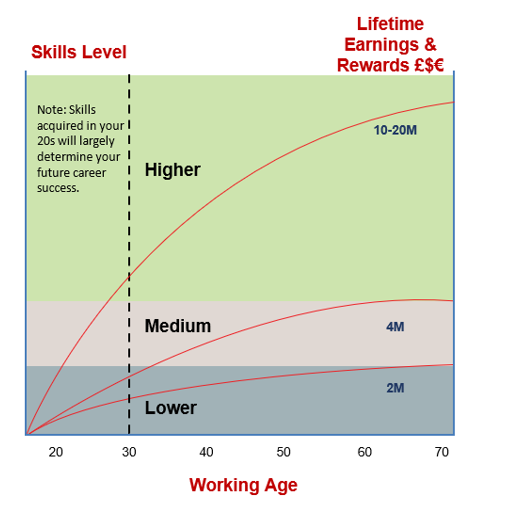
This graph illustrates that larger rewards – and often enhanced job satisfaction – accrue to those with greater skill. But what does greater skill mean?
For many people, their default learning position is a fragmented and random acquisition of skills. This is a high-risk scenario because it means learning is haphazard and very rarely acquired at the right time or applied in the right way.
The ‘skills and lifetime earnings’ graph illustrates that if you don’t have a strategy or roadmap to help you cultivate practical hard skills as well as soft ‘interpersonal’ skills early on in your career, ideally in your twenties, you will have increasing difficulty in acquiring them later.
This because the premature flattening of the career trajectory curve means that your chances of obtaining additional career-enhancing responsibilities will rapidly diminish.

Workplace Survival Skills teaches you to acquire competence in areas that are not appropriate to being taught on courses because they are self-directed and personalised to your needs, and your workplace environment and relationships. Such skills include:
The difference between stagnation and advancement lies in knowing what to do next.